


Water Curtailment
Water Curtailment
Every Drop Counts: Protecting Our Water Supply Through Responsible Conservation
Conway Corp has a five-phase plan to help manage water use during times when water is in short supply. This might happen during a long drought or if something unexpected affects the water systems, like a fire, flood or large water main break.
ALL OUTDOOR IRRIGATION IS NOW SUSPENDED.

Phase One
Phase 1 focuses on voluntary conservation measures and asks customers to reduce nonessential water use to help protect the community’s water supply.

Phase Two & Three
Phases 2 and 3 include mandatory conservation measures with increased restrictions on irrigation and other nonessential water usage as water supply conditions become more serious.

Phase Four & Five
Phases 4 and 5 are emergency-level curtailment stages focused on preserving water for essential domestic and critical community needs only.
Current Restrictions:
Phase Three
INVOLUNTARY REDUCTION IN WATER USAGE:
- All outdoor irrigation is suspended.
- Customers will be allowed minimum hand watering of potted plants and flower beds using hand-held containers.
- Commercial, Industrial and Institutional customers may be required to decrease their process water usage.
- Vehicles may be washed only at either high pressure, low water usage car washes or, if at home, using a pressure washer or a garden hose with a shut-off nozzle.
- Residential swimming pools may not be filled from empty. Pools can be topped off.
- Fire hydrant water shall only be used for fighting fires or as approved by Conway Corp.
- Splash pads which do not recycle or treat their water for reuse must cease operation.
Emergency Water Curtailment Plan
The five curtailment phases are designed to lower water use when needed, while still making sure there’s enough clean water for drinking, hygiene and keeping the city’s water pressure strong enough for everyday use and fire protection. The five stages can be put into place step by step or all at once, depending on how urgent the situation is.
By working together and following these stages when needed, we can help protect our community’s water supply and stay prepared for emergencies.
Phase 1: Potential Water Shortage
During this phase, Conway Corp asks customers to voluntarily reduce non-essential water use to help protect the community’s water supply. Customers may be asked to limit lawn watering and avoid activities such as filling pools or ponds, operating decorative fountains and washing sidewalks or driveways. Large commercial customers are asked to reduce the amount of process water used, and splash pads that do not recycle water are asked to decrease hours of operation. These measures are not enforced and rely on voluntary community cooperation.
Phase 2 & 3: Serious Water Shortage
Conway Corp implements mandatory water conservation measures in response to serious water supply concerns or infrastructure issues. Customers must significantly reduce irrigation and follow watering restrictions, while other non-essential uses, such as operating non-recycling splash pads and unnecessary outdoor water use, are prohibited. Phase 3 prohibits the filling of residential pools. Large commercial and industrial customers, as well as large water users, will be required to reduce consumption. These restrictions are enforceable under City of Conway Ordinance 0-99-74 and punishable by fines and/or discontinuance of water service.
Phase 4 & 5: Severe Water Shortage
Conway Corp implements severe emergency water restrictions to preserve water for essential domestic and sanitation needs only. All outdoor water use, including irrigation, filling pools and washing cars is prohibited. Commercial and industrial customers will be required to make additional reductions. These restrictions are enforceable under City of Conway Ordinance 0-99-74 and punishable by fines and/or discontinuance of water service.
FAQs
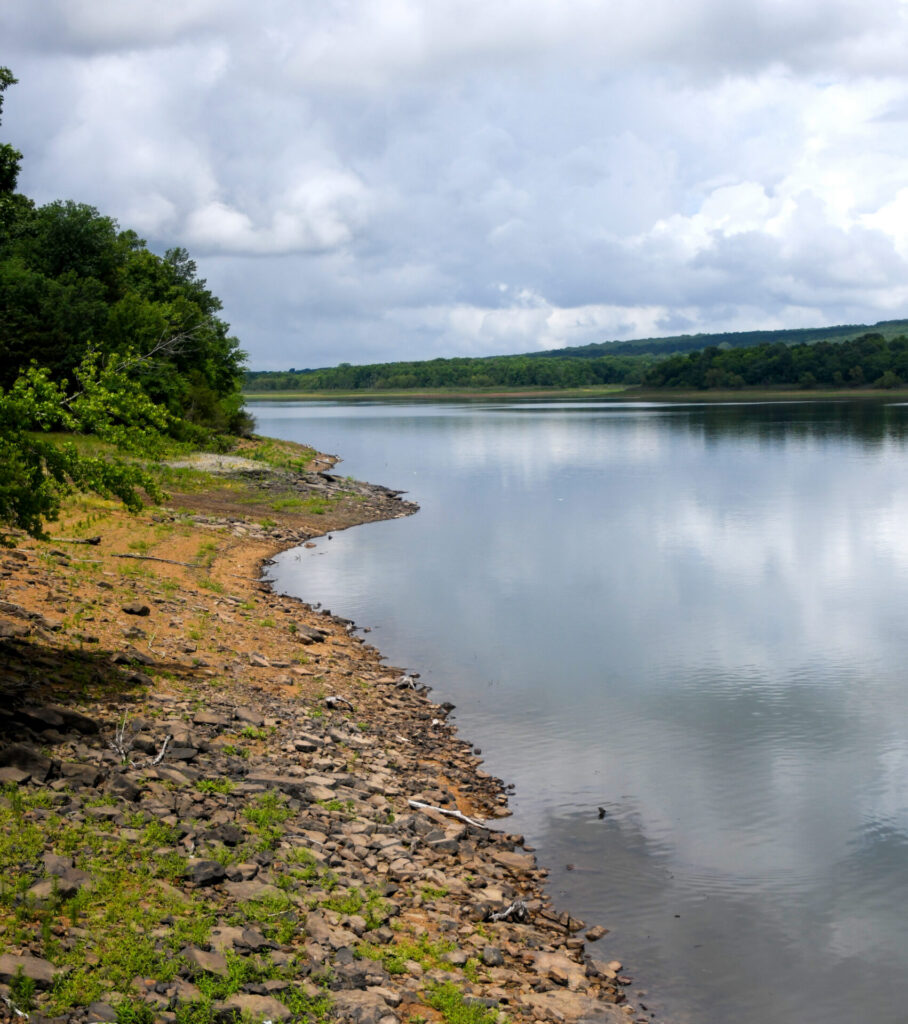
Central Arkansas is enduring a historic drought that began in the fall of 2025 and has resulted in severe precipitation deficits. Rainfall across the state is about 13.7 inches below normal for the year, resulting in Brewer Lake being more than 11 feet below its average level. You can follow drought levels here: https://www.drought.gov/data-maps-tools/us-drought-monitor
In the short term, Brewer Lake needs roughly 5 to 6 inches of widespread, heavy rainfall to significantly recover and begin returning to its normal seasonal levels. In the long term, we need closer to 27 inches of rain to completely erase the deficit across the watershed and fill the lake back to 330 feet.
Unfortunately, we can’t control rainfall, but we do take planning for our future water needs very seriously. Acquiring additional water rights and sourcing new water locations isn’t something that happens overnight. We’ve been planning for decades to ensure we have enough water now and in the future.
Conway Corp’s long-term water planning efforts are specifically designed to ensure the community has the capacity and infrastructure needed to support both residential growth and economic development well into the future.
Major projects underway or in development include an expansion at the Roger Q Mills Jr. Water Treatment Plant, construction of a second raw water line from Brewer Lake to Conway and continued planning efforts for additional long-term water sources.
Conway Corp engineers are working with the U.S. Army Corps of Engineers on a new intake and additional water allocation from Greers Ferry Lake while also partnering with the Mid-Arkansas Water Alliance, Community Water System and Conway County Regional Water Distribution District on future regional water supply projects that could serve more than 161,000 people across five counties.
You can learn more about these projects in past editions of our customer newsletter at ConwayCorp.com/newsletter or in the newest customer newsletter arriving in homes soon.
Currently, we are supplementing our water supply with 5 million gallons daily from Cadron Creek and 1 million gallons daily from Community Water Systems to help alleviate stress on Brewer Lake.
Conway Corp has an entire team of utility workers, engineers, plant managers and more working 24 hours a day, including a full-time employee who lives at Brewer Lake to help monitor the lake, the watershed and Conway Corp infrastructure. We are working to finalize a watershed development plan. You can learn more about all our efforts here: https://conwaycorp.com/brewerlake/
The Arkansas Department of Health does not recognize the Arkansas River as an approved source of drinking water. The river water’s quality is difficult to treat, and it functions as a discharge point for treated wastewater.
Conway Corp is not building a data center. If a proposed data center project moves forward in the future, it would use potable water for domestic needs only like handwashing and restroom facilities. Drinking water would not be used for cooling operations.
The current water curtailment is temporary and directly related to drought conditions and supply challenges. It is not connected to any data center project or future residential or commercial growth plans in Conway.
The curtailment request applies to both residential and commercial customers. Conway Corp is communicating directly with businesses and large water users about the importance of suspending non-essential irrigation and reducing water consumption. Community-wide conservation is necessary to protect the water supply for everyone.
We understand customers may feel frustrated when they see irrigation systems operating during a water curtailment. Currently, Conway Corp is in an involuntary curtailment phase and asking customers to reduce nonessential water use whenever possible.
At this time, irrigation is still permitted. However, customers must only water on their designated day(s). While some irrigation is still allowed under the plan, we are encouraging all customers to reduce or stop irrigation and other non-essential water use.
We understand why customers are asking this question. Businesses such as car washes, golf courses and other commercial customers are also being asked to voluntarily reduce water use during the current curtailment.
We never want to see local businesses forced to close or reduce operations because those businesses support jobs, families and livelihoods throughout our community. Our goal is for everyone to do their part by making reasonable reductions in water use so we can collectively reduce demand while minimizing the impact on residents and businesses alike.
It is also important to note that many of these businesses use alternative water sources or conservation systems as part of their operations. Local golf courses rely on their pond water for irrigation, and many car washes recycle and reuse water to significantly reduce overall consumption.
If water supply conditions worsen and additional curtailment phases become necessary, more restrictive measures could be implemented for all customer groups, including commercial operations.
Prior to June 1, 2026, the curtailment was voluntary. After June 1, 2026, the curtailment is involuntary and includes mandatory restrictions.
Conway Corp is monitoring compliance and evaluating enforcement measures that may include warnings, direct customer outreach and potential penalties for repeated violations.
City of Conway Ordinance 0-99-74 makes violating of the curtailment plan a misdemeanor and punishable by fines and/or discontinuance of water service. However, our focus is on community cooperation and meaningful conservation efforts across all customer groups.
Small reductions across thousands of customers can make a significant difference in preserving the community’s water supply. More than 90 percent of our customers are residential and account for more than 60 percent of total water use.
Small changes make a big impact. For example, turning off the water while brushing your teeth will save up to 4 gallons per minute. That’s more than 200 gallons a month saved by just one person doing one small act.
Community-wide conservation efforts like this now help reduce the likelihood of more severe restrictions later.
Non-essential water use includes activities such as:
- Lawn irrigation and sprinklers at homes and businesses
- Washing vehicles at home
- Filling or refilling swimming pools
- Pressure washing
- Washing driveways and sidewalks
Water used for drinking, cooking, bathing, sanitation and business operations is considered essential and still permitted.
We continue monitoring lake levels, weather conditions and overall water demand daily, and restrictions will remain in place as long as necessary to protect the community’s water supply.
We expect these measures to remain temporary, but we need a lot of rain to return lake levels to normal, and we cannot provide an exact timeline.
As soon as conditions improve, we will evaluate lifting or reducing curtailment measures. Updates will be provided as conditions change.